Guide · 8 minute read

Standard ERP starts with the product. Bespoke work starts with the promise.

A made-to-order job is still becoming what it will be after the quote. Survey, design, approval, fabrication and installation all refine the promise—and the system has to remember every change.

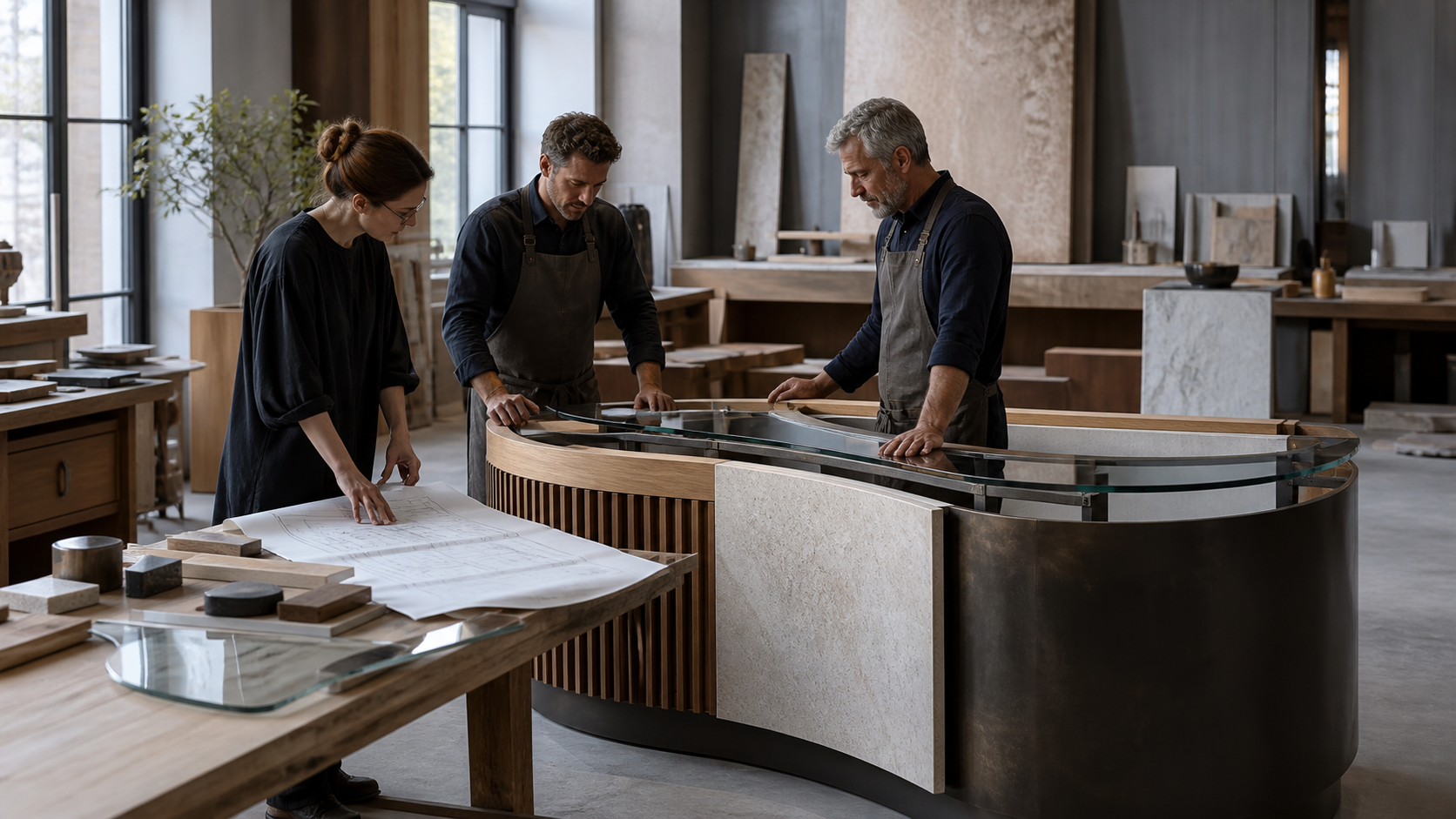
A designer and craftspeople resolving a unique curved mixed-material reception piece against its drawing

One-off work is the normal case, not the exception.

The assumption is the problem

Repeat the product—or carry the job?

Standard production software is excellent at repeating a known answer. It expects a stable SKU, a fixed bill of materials, a predictable routing and variance that should be pushed back toward zero.

Bespoke manufacturers solve a different problem. They sell an outcome before every detail is known, then turn measurements, drawings, choices, approvals and site conditions into something physical. Change is not process failure. It is part of the process—and it has a cost, a decision and an owner.

Two different operating models

One repeats a known answer. The other carries a changing promise.

The difference is not a longer product description. It is what the system considers to be the source of truth.

Standard production logic

Repeat the product

The catalogue defines what should happen. The individual order mainly asks for quantity, date and destination.

  • A stable SKU is the centre of the record.
  • The bill of materials is designed to be reused.
  • Routing and lead time are predictable.
  • Stock commonly exists before the sale.
  • Variation is treated as an exception.

Bespoke production logic

Carry the job

The order becomes the evolving specification. Every operational decision must stay connected to that exact promise.

  • Every order can hold its own specification.
  • Survey, drawings and approvals refine the scope.
  • Material, capacity and time trace back to the job.
  • Delivery and installation can happen in phases.
  • Change is normal, visible and costed.

Inside ScaleBespoke

The order becomes the spine of the business.

The promise won in CRM converts into an order. Its drawings, changes, stock, planning, time, invoices, compliance, delivery and aftercare continue under the same identity—without forcing a unique job into a generic product code.

app.scalebespoke.com
SANDBOX DEMO Sanitized product view
Dashboard CRM› Orders Clients
✦Ask Peter anything...
2Webmail4Notifications0ChatSB
OrdersFrom won deal to delivery and installation
Search⌕OwnerAll⌄EmployeeAll⌄CountryAll⌄FactoryAll⌄Main StatusAll⌄StatusAll⌄Shipping StatusAll⌄
□No.TitleCustomerFactoryMain statusStatus
□SB-1281●   Bespoke entrance setNorthstar FabricationWorkshop ACreatedRequest
□SB-1280●   Courtyard balustradeSample Projects LtdWorkshop ACreatedConfirmed
□SB-1278●   Reception screensHarbour JoineryWorkshop BStartedConfirmed
□↳ SB-1278_E1Extra order · finishingHarbour JoineryWorkshop BStartedBy us
□SB-1271●   Feature staircaseApex StudioWorkshop ACreatedOn hold
□SB-1264●   Steel canopyDemo CompanyWorkshop AShippedConfirmed
✦Peter
Order proof
Approved scope stays with the order.
The latest drawing is the one people see.
Every change keeps its margin impact.

Where margin disappears

Small disconnects become expensive at the end of the job.

Bespoke margin is rarely lost in one dramatic moment. It leaks through the handoffs standard ERP assumes should not need special attention.

01

Quote drift

The promise evolves, but the commercial baseline is not updated with it.

02

Revision loss

A superseded drawing reaches production because approval lived somewhere else.

03

Material change

A substitution solves the physical job but its extra cost never reaches the order.

04

Unrecorded effort

Design, rework and site time are absorbed because they are detached from the change.

05

Phased completion

Part-delivery and installation split the story just when billing and aftercare need it most.

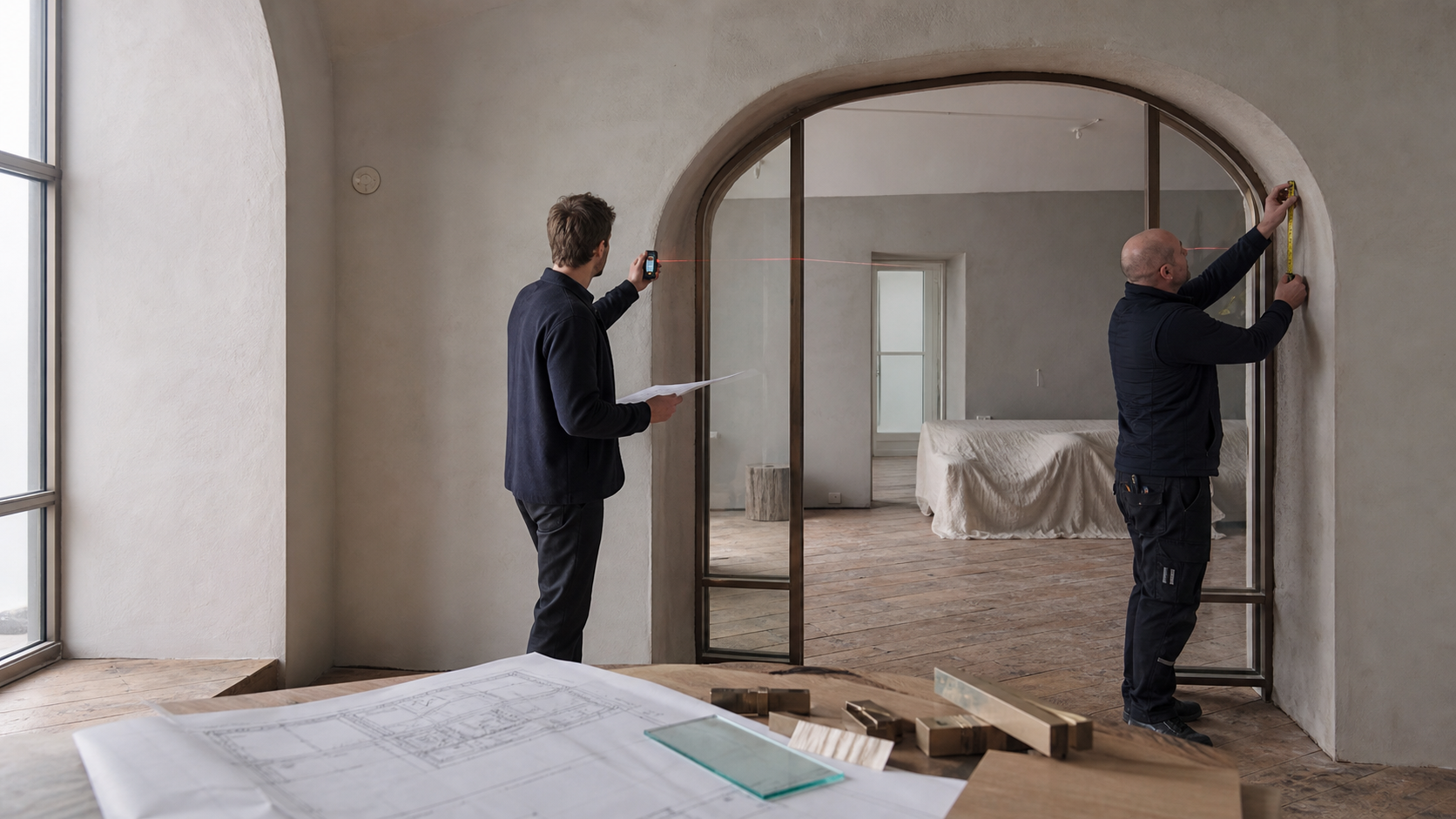
An architect and installer measuring an irregular arched opening on site

The physical truth

The real site never matches a catalogue.

An opening is uneven. A floor falls. A finish sample changes in daylight. A client approves one detail and revises another. Good bespoke software gives those discoveries a controlled route back into the specification, plan and commercial record.

A practical buyer test

Five questions standard ERP demos often avoid.

Ask the vendor to follow one changing order from enquiry to site—not a clean catalogue item through a prepared factory route.

  1. 01

    Can every order carry a unique specification without becoming a workaround?

  2. 02

    Are revisions and approvals attached to the order people actually use?

  3. 03

    Can an unplanned change be approved, priced and traced before work continues?

  4. 04

    Do planning, material, time and billing share the same order context?

  5. 05

    Can the job split into phased delivery and installation without losing its history?

Bespoke manufacturing is not failed mass production. It is a different operating model—and the system should begin there.
See a bespoke order in action

More guides

Get started today